Phuket Records Thailand’s Third-Highest Covid-19 Rate as DDC Says Cases Remain Mostly Mild
COVID-19 continues to circulate in Phuket and across Thailand, but the illness caused by the currently dominant variant remains generally mild, with most patients experiencing symptoms similar to those of a common cold, according to the Department of Disease Control (DDC).
As of August 31, Phuket had recorded 514.85 Covid-19 cases per 100,000 residents, giving the province the third-highest incidence rate in Thailand. Bangkok ranked first with 643.65 cases per 100,000 people, followed by Chon Buri with 530.52.
The DDC said Phuket’s relatively high rate is partly associated with the province’s role as a major international tourist destination and its population density. Both factors can contribute to higher case rates when infections are calculated against the resident population.
Thailand recorded 99,691 Covid-19 cases and 15 deaths between January 1 and August 31, based on figures presented by the DDC on September 1. Despite the number of reported infections, health authorities said there is currently no indication that Covid-19 is causing more severe illness.
The Omicron subvariant NB.1.8.1 remains the dominant strain under surveillance in Thailand. It was detected in 524 cases, accounting for 50.14% of the surveillance data. The variant has been circulating in Thailand continuously since mid-2025. According to the DDC, there is no evidence that NB.1.8.1 causes more severe disease, although it may be more transmissible than some earlier strains.
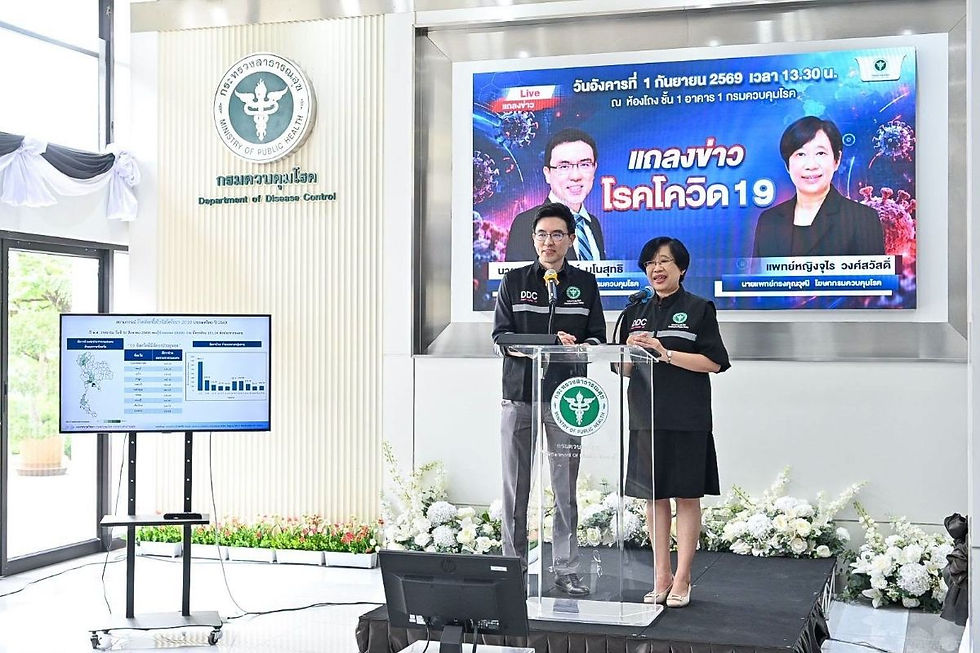
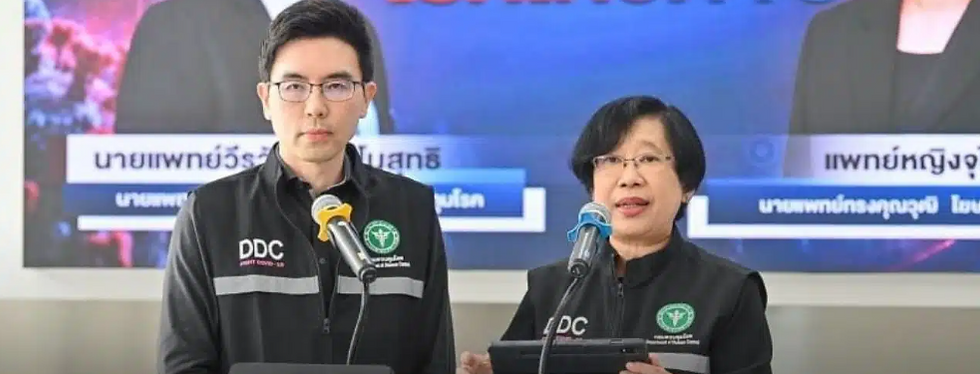
DDC medical expert and spokesperson Dr Veerawat Manosutthi said the symptoms currently seen among Covid-19 patients remain broadly comparable to those associated with previous variants. Common complaints include coughing, sore throat, a runny nose and fever, with many patients describing the illness as similar to a cold or influenza.
The department emphasized that the appearance of a new Covid-19 subvariant does not automatically mean that the disease has become more dangerous. It also advised the public not to become overly concerned about the names given to individual variants.
Instead, people are encouraged to follow information from reliable public health authorities and continue taking sensible precautions against respiratory infections.
Rest when sick and limit close contact
The DDC recommends that people who develop symptoms get enough rest and reduce close contact with others. Those who are unwell should monitor their condition and, where possible, avoid close contact with elderly people, young children, people with underlying health conditions and those with weakened immune systems.
People who are sick should also stay away from crowded places whenever possible. If contact with others cannot be avoided, wearing a mask and washing hands frequently are recommended.
Although most current Covid-19 infections are mild, the DDC warned that members of its so-called “Group 608” remain at higher risk of developing severe illness and should take additional precautions.
The group includes people aged 60 and over, pregnant women who are at least 12 weeks into pregnancy, and individuals with chronic respiratory or cardiovascular diseases, chronic kidney failure, a history of stroke, obesity, cancer or diabetes.
The DDC said there is no reason for the public to panic over changes in circulating Covid-19 variants. People can continue their normal daily activities while following reasonable health precautions.
Anyone whose symptoms do not begin to improve within one or two days should consult a doctor. Immediate medical attention is recommended for people who develop breathing difficulties, shortness of breath, chest tightness, severe fatigue or other signs that their condition is getting worse.



Comments