Phuket Air Quality Remains Moderate Amid Thailand’s Ongoing Smog Season
Air quality in Phuket continues to stay within the “moderate” (yellow) range, even as Thailand faces an ongoing wildfire and smog season affecting several regions.
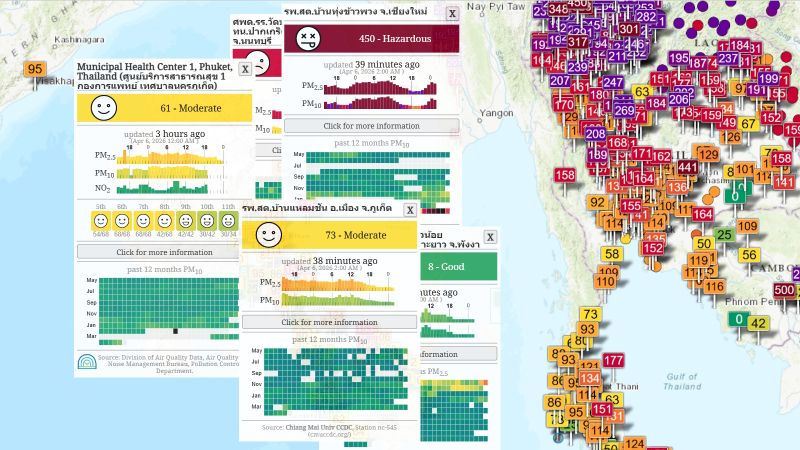
Over the past weekend, authorities in three northern provinces declared large areas disaster zones due to forest fires. As of April 6, this status remained in seven districts of Chiang Mai, eight in Lamphun, and nine in Phayao.
Air quality readings in some northern monitoring stations exceeded 200 AQI last week, indicating a severe health hazard (purple level). Meanwhile, Bangkok has consistently recorded levels above 150 AQI, placing it in the unhealthy (red) category on a daily basis.

Phuket, by contrast, is not experiencing local wildfires or heavy traffic smog like the capital. However, the occasional haze over the island is caused by the same factors affecting other parts of the country.
The positive takeaway is that Phuket’s AQI has not exceeded 100 so far this year, meaning it has remained within the yellow zone and avoided more dangerous levels. On the downside, in previous years, the island has occasionally slipped into the orange zone, which poses health risks for vulnerable groups.
At-risk groups include:
Children, whose respiratory systems are still developing and who inhale more air relative to body weight
Elderly individuals with reduced lung function
Pregnant women, due to potential risks to pregnancy
People with chronic conditions, especially respiratory or cardiovascular diseases such as asthma or heart issues
Outdoor workers exposed to polluted air for extended periods, often combined with heat
Recommended precautions for vulnerable groups:
Regularly monitor AQI levels
Avoid outdoor exercise during periods of higher pollution
Limit overall time spent outside
Use protective masks when air quality worsens
Use air purifiers indoors
Tracking AQI levels helps identify peak pollution periods and avoid unnecessary exposure. Elevated PM2.5 concentrations are often visible as haze and may be accompanied by a metallic or unpleasant smell in the air.

Air quality monitoring services include:
IQAir
AQICN
Air4Thai
Typically, Thailand’s smog season ends in May, when wind patterns shift and the rainy season begins, helping to clear the air.


Comments