Foreign Tourist Hospitalised After Portuguese Man o’ War Sting at Phuket Beach
A foreign tourist was hospitalised after suffering a severe allergic reaction from contact with a Portuguese man o’ war at Naithon Beach in Phuket. Lifeguards administered first aid at the scene before the tourist was taken to hospital.

The incident was reported on September 9 after the Phuket Times Facebook page published photographs from Naithon Beach in Sakhu subdistrict, Thalang district.
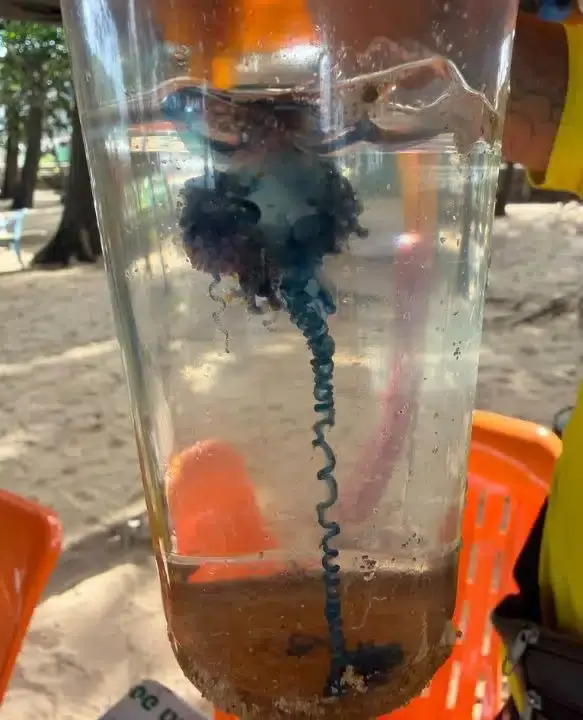
The images showed what appeared to be a Portuguese man o’ war inside a container, while visible marks could be seen on the tourist’s leg where contact with the marine animal had occurred. Lifeguards responded to the incident and provided first aid before arranging transport to hospital.

Lifeguards have urged both Thai and foreign beachgoers to exercise caution when entering the sea. Anyone who sees a Portuguese man o’ war or another potentially venomous marine animal should not touch it with bare hands and should immediately notify lifeguards or other officials.
According to San Paolo Hua Hin Hospital, people who come into contact with a Portuguese man o’ war should carefully remove any remaining tentacles using an object such as a card, piece of paper or stick, while avoiding direct contact.

The affected area should not be rubbed or massaged, and medication should not be applied. Tiny venom-containing structures can remain on the skin even when tentacles are no longer visible, and pressure or rubbing may trigger them and make the reaction worse.
The hospital recommends rinsing the affected area with seawater to help remove any remaining tentacles. Fresh water should be avoided because it can cause further venom discharge.
Where available, a spray anaesthetic may be used to ease pain and reduce the urge to rub the affected area. If no spray is available, ice can be applied gently to help relieve discomfort.
Anyone who develops serious symptoms, such as difficulty breathing or loss of consciousness, should receive emergency medical attention and be taken to hospital immediately.
The hospital also advises people who want to reduce the risk of encountering jellyfish to consider staying out of the sea during the rainy season, when jellyfish are more commonly present and can appear in larger numbers.


Comments